

05 Nov Shrink Rap: A Diamond Bra & Mental Health!
A Telluride local, Dr. Paul Hokemeyer is an internationally recognized expert on treating clinical issues at the nexus of relationships and behavioral health. (Please scroll down for more about Dr. Paul)
The new edition of Dr. Paul’s terrific book “Fragile Power” was recently republished. Go here to read more about what Dr. Paul has to say on the subject of the original.
Go here to read more of Dr. Paul’s pearls.
We curated the following from a recent edition of Dr. Paul’s Drayson Mews newsletter. The story is titled “A Diamond Bra and our Mental Health.” It was triggered the day Dr. Paul watched Kylie Jenner walk the Victoria’s Secret runway wearing a bra worth $50 million.
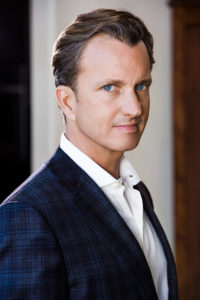
Dr. Paul Hokemeyer
…There was no fabric. Only 18-karat gold and 4,410 natural diamonds, assembled by 15 artisans over more than 1,000 hours. At its center hung a 75-carat yellow diamond, reportedly worth $22 million on its own.
I’ve returned to the image many times… Not because it’s beautiful. It isn’t. It’s garish and wildly over the top, a chandelier mistaken for clothing. But it’s one of the most honest portraits of our contemporary zeitgeist I’ve recently seen.
Consider what it holds.
Stones pulled from the earth by one of our most extractive industries, at real human and ecological cost, then shaped into a garment that warms no one, shelters no one, and now awaits a private buyer. Its only function is to be seen. Its only message is: look what can be conquered and displayed as a trophy of my financial superiority.
The ancients have experience with this.
Frightened in the wilderness, the Israelites melted their gold into a calf and bowed before it. The sin was not the gold. It was the transfer of faith, from what binds us to one another to what glitters before us.
Victoria’s Secret’s diamond bra worn by Kylie Jenner is today’s golden calf: a god of material opulence, beamed into a world where so many struggle to afford the basics of life.
I’m not writing this out of contempt for wealth or as a critic of capitalism.
To the contrary.
For the past 20 years, I’ve worked as a licensed marriage and family therapist to some of the world’s wealthiest and most powerful individuals, couples and families. I chose this license deliberately, because of its systemic view of mental health. In this regard, my colleagues and I refuse to look at our clients in isolation.
We ask about the context of their lives: their family, their history, their culture, the forces that shape how they love, fight, grieve, and heal.
For us, wealth is more than a number on a balance sheet. It’s a salient identity that shapes how our clients see themselves, how others view them in relationships, and how they move through – or hide from – the world.
In this regard, wealth is not a moral failing per se. It’s an energy that can fuel positive outcomes or cause destruction, decay, division, and death, a complex identity that’s never neutral.
Over time, wealth either serves something larger than itself, or it cannibalizes the people who hold it.
The diamond bra symbolizes the cannibalization of our humanity. It’s the product of what happens when the question is “Can we?” rather than “Who are we when we do?”
And it is the question of ‘who are we as a person of wealth’ that sits at the heart of my work with the individuals and families I treat for a host of behavioral health and relational disorders.
Wealth has a way of loosening a person’s worth from their effort, so that the self begins to feel feigned, borrowed, and corrupted. It can gild over despair until the sufferer devolves into destructive behaviors, and it gathers around a person those who love what they hold more than who they are.
But in a safe, structured psychotherapeutic frame, my colleagues and I create space for conversations many of my clients have never dared to have: Who am I once the money falls silent? What is it numbing in me, and what is it quietly feeding? Who knows me well enough to be genuinely concerned for my well-being? And when every fall is cushioned, how will I ever know I’ve reached the bottom and found the place where I might begin anew?
These are not easy conversations.
Generations of silence, rivalry, and fear often stand in the way. But when these clients find the courage to have these honest conversations within a safe, structured therapeutic frame, something shifts. Wealth stops being a monument to hubris and becomes a means to a reparative and humanistic end.
Used with intention, capital can heal rather than hurt.
It can connect rather than divide.
It can open doors for others to move toward connection and repair.
The diamond bra, in contrast, supports nothing but its own spectacle. It symbolizes the danger of wealth overly focused on extraction and display: it dazzles, but offers no social value.
And it highlights how the distance between those who wear the diamonds and those who dig them from the earth, between the runway and the rest of us, is growing wider every year.
Families that let that kind of distance grow and harden rarely stay healthy and whole.
Neither do societies.
We are living through one of those moments when a culture decides what it truly values.
The choices we make in the coming days, in our homes, our communities, and our public life, will shape whether we allow extreme wealth to keep corrupting and betraying our values or whether it can be redirected towards repair, connection, humanistic and social support.
I’ll be voting and working for the redirection. Give a shout if you’ll be joining me.
With warm regards and appreciation,
Dr. Paul
Dr. Paul, more:
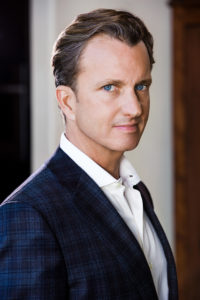
Paul Hokemeyer, J.D., Ph.D. is the founding principal of Drayson Mews, an international behavioural health firm based in London and author of “FragilePower: Why Having Everything Is Never Enough,” (Hazelden, 2019), the seminal resource for UHNW and high-performance individuals looking for clinically excellent mental and relational health services.
A licensed Marriage and Family Therapist, Dr. Paul is a graduate of the Global Leaders in Health Care program at Harvard Medical School and studied the use of digital technologies to enhance the delivery of mental health and addiction treatment services at the Yale School of Management.
Dr. Paul serves as a clinical consultant to the London based Ispahani Advisory Limited and is a Clinical Fellow at the American Association of Marriage and Family Therapists.
In addition to his legal and mental health background, Dr. Paul has extensive experience in the realm of philanthropy through his work as a trustee of a family foundation, and the Palm Springs Art Museum, one of the world’s leading institutions for midcentury design and art.
No Comments