
14 Feb Telluride AIDS Benefit 2026: Still Critical? Yup! Overview!
The Telluride AIDS Benefit (TAB) is a nonprofit whose mission is to fight HIV/AIDS by heightening awareness across demographics and generating financial support for educational programs and client care from the Western Slope to Subsaharan Africa.
Click here to learn about the beneficiaries TAB helps to support big time.
Click here for tickets to a fashion show.
Can’t attend? Click here to donate to the cause.
Go here for more on TAB’s history.


Laya Barak: TAB’s Executive Director:
She came. She saw. She conquered.
(And now has big plans for upping the ante.)
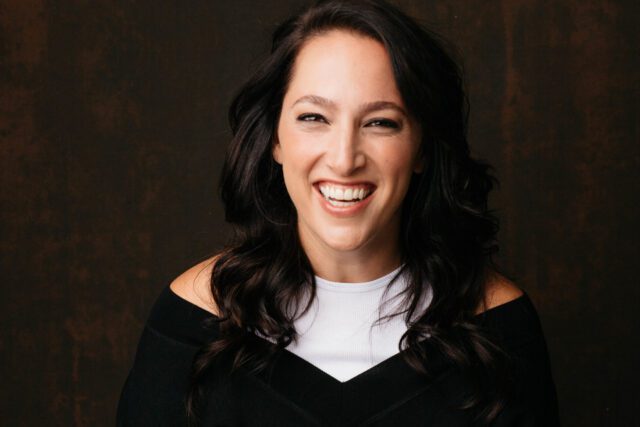
Laya Barak, courtesy TAB.
The Telluride AIDS Benefit’s (relatively) new Executive Director is no newcomer to town. In 2023, Laya Barak and close friend/professional colleague Kellen Stancil first came to Telluride to direct the gala fashion show.
And what a show it was: smart, sassy and sexy.
In August 2025 Laya was hired as TAB’s new Executive Director.
Before coming to Telluride, Laya was Artistic Director of Broadway Bares, Broadway Cares/Equity Fights AIDS in New York, NY, a nonprofit funding organization focused on fighting HIV.
“I vividly remember my exposure to the organization during a TAB education day. I was captivated by the evolution of this disease since the first mysterious lesions of Kaposi’s Sarcoma were identified in the urban clinics of Los Angeles, and how I sat in the audience, newly exposed to decades of loss, scientific inquiry, and social activism. It was during this outreach and education day and learning about the history, culture, and the impassioned advocates that lured me in. From there I became fascinated by the populations disproportionately impacted by HIV and AIDS, and how Telluride somehow played a role in this story.
“So HIV was not just a disease I heard about. My past experience and TAB provided a platform to learn the history of the pandemic and about the people who suffered in silence as healthcare providers searched for answers,” Laya explains
So Laya brings extensive experience in HIV activism, arts leadership and community engagement and a proven record in nonprofit fundraising. Her considerable street cred is now instrumental in furthering TAB’s mission to end HIV through fashion events, education, creativity, and cultural connection in Telluride and beyond.
Yes, by 2014, the outlook for people afflicted with HIV/AIDS had remarkably improved, yet the disease continued to entrench itself in certain communities across the globe.
“Fast forward to 2026, we celebrate remarkable biomedical advancements, yet HIV/AIDS continues to reach marginalized populations, some harder to reach than ever before. Today I see TAB as sitting at the intersection of philanthropy and cultural commemoration. That is a key reason for its unique position within the landscape of HIV funding and advocacy organizations,” Laya adds.
The Telluride AIDS Benefit (TAB) is often described as “a small-town event with outsized global impact.” What makes it unique isn’t just the money it raises — it is the unique model the nonprofit represents: art + activism + philanthropy braided into one immersive cultural ritual.
Since its inception TAB has raised $3+ million, which is extraordinary for a small, remote mountain resort town.
But given the fact the disease is preventable and treatable does TAB’s work remain critical?
The following is a note from the Duke Center for AIDS Research underlines why the answer is “Yes.”
“Global HIV treatment and prevention programs such as PEPFAR are not a zero-sum game. The progress we’ve made against HIV has always depended on a comprehensive approach that includes both prevention and treatment. Creating an artificial competition between these complementary strategies undermines the fundamental public health principle that prevention reduces the need for treatment, and that treatment for HIV is prevention.
Instead, we should focus on expanding the resource pie rather than fighting over its pieces. In an era of political shifts and competing health priorities, the HIV response must remain resilient and adaptable. Global health initiatives must make the case for HIV’s continued prioritization, ensuring that it remains integral to health systems strengthening worldwide. This means working collaboratively across sectors – governments, multilateral institutions, private sector, philanthropic organizations, and affected communities – to raise additional resources and support an evidence-based response that will put us back on track.”
A note from Ron Gilmer explains further:
Recently I spent several hours with the folks at Western Colorado Health services, they are most concerned about the likely loss of almost all dedicated national HIV prevention funding in 2026. The unknown from the administration is effecting wide ranging mental wellbeing resulting in unfilled positions and expertise being lost to other fields. These cuts are already affecting work in rural areas, most notably the Durango region and other southern areas of western Colorado and were not imagined a year ago.
Most TAB funds help service many projects within the western slope AIDS community that are not covered by other private or federal funds. For instance, travel vouchers to help get clients to the clinic. Restrictions of any kind have a domino effect on how clients receive aid and can hamper abilities to control the disease especially in rural areas.
Most at risk for 2026 are cuts to prevention funds where it is well known that elimination of even one new HIV case can save $500K in health care costs over a lifetime. Even a 20% reduction in prevention funding in the US will result in 78,000 new cases over the next four years, in addition to what was already projected to occur.
Besides prevention there are many administrative costs not covered by any federal or private funds that TAB helps with that are vital to successful outreach.
Other TAB funds help beneficiaries that work statewide or in the instance of our African aid, it helps educate AIDS orphans for a better life. All of our beneficiaries are unique and cannot be categorized as having one need. Our student programs are very successful and are being expanded every year, others can fill in more detail on this.
As with any disease, there are indeed large foundations that help service the needs caused by HIV/AIDS. Most were in place before TAB began so this is not a revelation. Very few funds from these groups reach Colorado and not for lack of trying, there are simply too many requests everywhere to service everybody. There are still 1.4 to 1.6 million estimated new cases of HIV globally every year so there is obviously not enough funding available.
TAB has an admired presence in Telluride; since 1994, hundreds of professionals and community members have worked to make each year better than the last, raising funds and awareness that this year will especially assist our beneficiaries and student education initiatives. TAB has made a difference, we must continue doing our part.
Sincerely and from my heart…Ron
Prevention education in action:
Since TAB’s inception, Ron’s mantra has been “prevention education.” And that remains a key focus of the nonprofit today.
“Larger funding organizations who are able to contribute more dollars to health programs than our local 501c3 aside, TAB’s ability to serve as a platform for students to become inspired on one (or more) of the many facets of the organization is in itself, priceless. Over the years, TAB board members identified this gap opportunity, and pushed to build out the student program on the public health, health education and advocacy side of the challenge, as well as incorporating art and production opportunities for the annual student show.
“Board member Joey Hunt went to school for this type of work because of her experience with TAB so if that doesn’t speak to the community engagement and our student education program, I’m not sure what does,” declares Laya.
“Speaking from my experience as a Telluride High School graduate, I owe my pursuit of a PhD in Infectious Disease Epidemiology to my involvement in TAB and the people I have met through this organization. TAB, combined with the incredible community and people that continue to support this cause, are uniquely capable of integrating students into meaningful work from a young age. For me, it was pivotal in sparking my interest in public health and education, not to mention the mentors I was connected with from TAB who continue to provide mentorship and help in navigating my professional degree.
“Being involved as a student builds confidence and inspiration of what you can do when you get outside of the telluride bubble. I am forever grateful for having the opportunity to engage with this organization throughout my high school experience, and I am so proud to be from a community that provided me the safe space to learn and hold uncomfortable conversations about these topics,” explains Joey.
“Three years ago, when I first directed the fashion show, there were 47 models. Today, there are 100 models. TAB’s reach and involvement has grown tremendously and I am proud of all those involved to include and reach more of the THS community,” explains Laya.
Regardless of the number of students who continue, like Joey, to work in the field of public health, the fact that 100 students are learning about HIV, digging into organization and education efforts, and engaging in discussion about this disease despite ongoing stigmas, is remarkable.
“From personal experience, peers in college and now in my PhD program continue to be blown away that little Telluride has students who know about HIV, its history, and that our school offered opportunities to hold uncomfortable conversations. Whether someone is involved for the mark on their application or because they have the slightest interest in advocacy, public health, or philanthropy, TAB provides a unique avenue for community involvement that gives back beyond a resume builder,” continues Joey.
Summing up:
Since its inception in 1981, according to UNAIDS/World Heath Organization almost 45 million people have died of AIDS-related illnesses worldwide. And current annual death now stand at about 600,000/year.
While it is true HIV/AIDS has dropped from headline news, the virus has cost America too much for too long – and it remains a significant public health issue. More than 700,000 American lives have been lost to HIV since 1981. More than 1.2 million+ Americans are currently living with HIV and many more are at risk of infection.
Over the years, as people have watched friends cut down in the prime of life, they tried to make sense of the scourge by channeling their experience into ways to help. The Telluride AIDS Benefit evolved from that impetus back in 1994..
The fledgling event that blossomed into TAB was all about helping a local and friend, Robert Presley, battle the disease and pay his mounting medical bills. But what Presley and this partner. Ron Gilmer wanted was to help others who faced with the same challenges he faced.
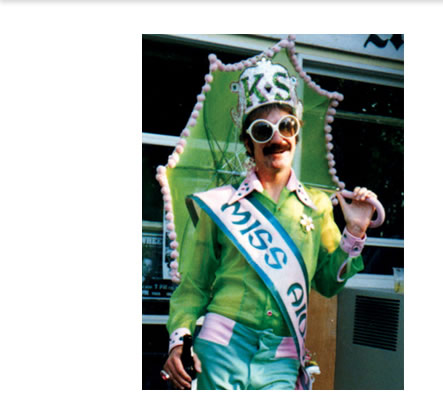
Presley died in 1997 from causes related to HIV/AIDs, but his selfless wish came true: the nonprofit he inspired, TAB, helps individuals and families dealing with HIV/AIDS on the Front Range all the way to sub-Saharan Africa through a growing list of beneficiaries. These organizations use these funds to support AIDS services for individuals and families alike in large part because, unlike HIV/AIDS money that originates from government programs or larger foundations, TAB funds are distributed with no strings attached.
Most of those life-changing dollars are raised at the aforementioned annual fashion show, this year February 26 – February 28, again at the Telluride Conference Center.
In our ever-changing political climate, TAB funds remain as important, perhaps more important than ever.
In fact a recent eblast from the Colorado Health Network announced that $400,000 of funding was cut by this administration. Those monies were targeting programs for the nonprofit’s HIV testing and prevention programs, especially those designed to improve health outcomes and stop the spread of HIV in Colorado.
Gone. Overnight. Without warning..
“TAB dollars translate into tangible impact: transportation assistance so patients can reach specialty care, testing kits and outreach staff for rural communities, PrEP education and access, nutritional support, youth prevention curricula, and wrap-around services that stabilize housing and mental health. In many cases, relatively modest grants make the difference between a program existing or not,” explains Laya.
And, the nonprofit manages to realize its lofty goal while running a squeaky clean shop, as follows:
• Administrative, 8–12%
• Staffing,
10–15%
• Fundraising
, 73–82% Program Grants, Direct Aid, and Education
Those numbers reflect a strong commitment to efficiency, while still investing appropriately in infrastructure that ensures accountability, donor stewardship, and long-term sustainability.
Since its inception TAB’s mission has remained unchanged: Fight. Fund. Educate. And goal of the nonprofit (aligned with global organizations) is ZERO new infections in the state of Colorado, across the country, and around the world is reached.
TAB (and other AIDS crusaders) believe that goal is attainable by 2030.
“One thing I am most proud of is starting the model fundraiser that connects the cast to the cause by raising money through the 6 weeks of rehearsal process. Whatever monies come in, goes completely to our beneficiaries. The first year we raised $23K and gave $20K to the Ethiopian Family Fund, which was about to go under without our help. Last year we raised $36K that we distributed among all our beneficiaries. This year we are doing both an adult and student fundraiser and are currently at a combined $68K and counting. Everyone is touched by the work they are doing and as a community they are uplifted to be working together on this incredible show for an amazing cause.”
To which we say “Amen. Go forth and prosper…”
Sorry, the comment form is closed at this time.