
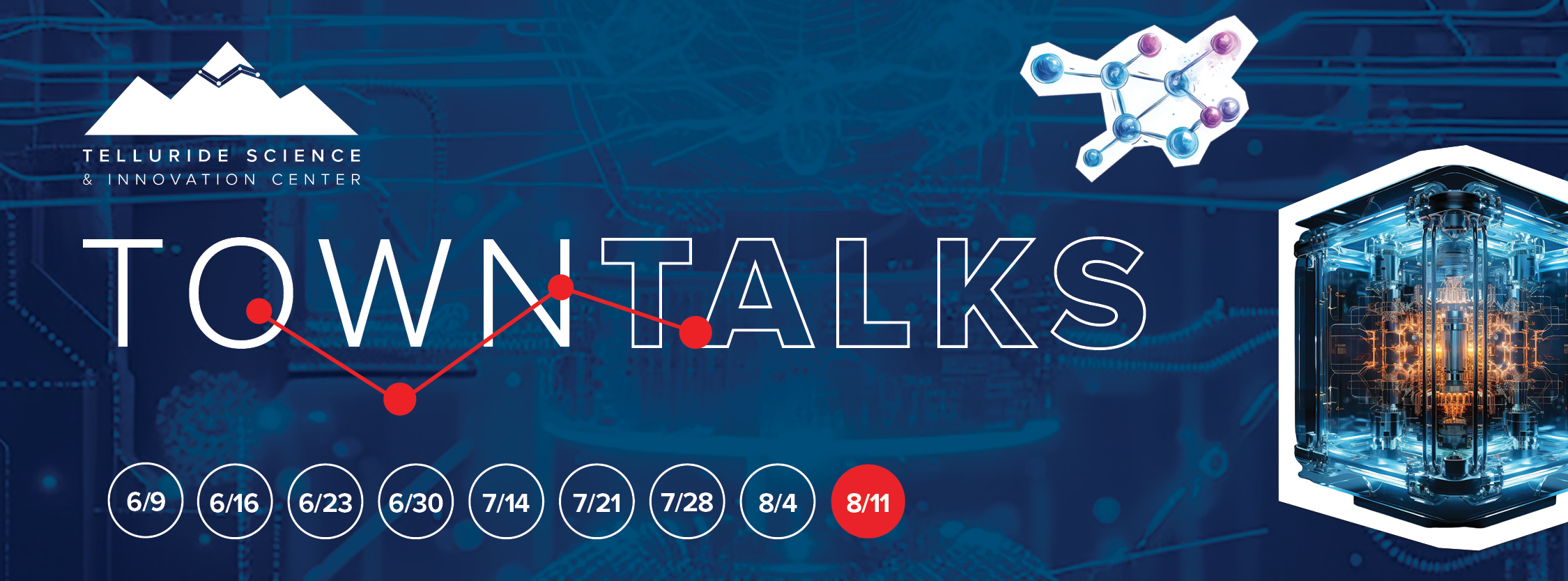
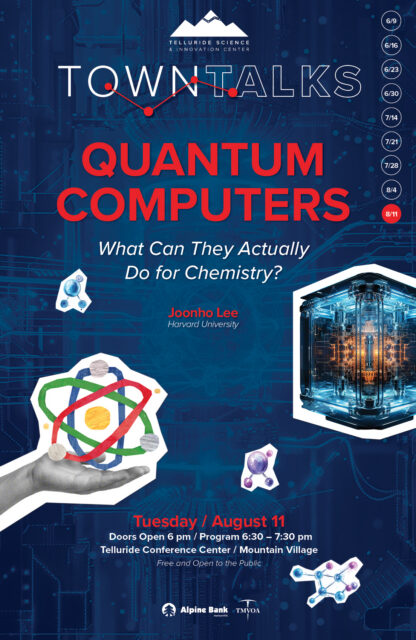
05 Aug Telluride Science Town Talk: “Quantum Computers, What Can They Do For Chemistry?,” 8/11!
This coming week the 2026 Telluride Science Town Talks series continues with “Quantum Computers: What Can They Do For Chemistry?.” The event features Dr. Joonho Lee of Harvard.
Talk takes place Tuesday, August 11. Doors 6 p.m.; talk, 6:30- 7:30 p.m.
Town Talks are FREE and open to the public.
Visit telluridescience.org to learn more about Telluride Science and the historic Telluride Depot, now the Telluride Science & Innovation Center. The venue is the permanent home for Telluride Science and a global hub of inspired knowledge exchange and development where great minds get to solve great challenges.
The 2026 Telluride Science Town Talks series is presented by Alpine Bank with additional support from the Telluride Mountain Village Owner’s Association.
Go here for more about Telluride Science.
Go here for more on Town Talks.
Can a computer do chemistry without a single beaker?
Harvard’s Dr. Joonho Lee is betting on yes and he’s coming to Telluride to tell you why that’s so important.
The short answer: quantum computing and computational chemistry.
Don’t know what quantum computing is, you’re in good company. Most people don’t. You just need to be a little curious about what happens when two of the most exciting frontiers in science, chemistry and computing, join forces. The potential payoff is huge: faster drug discovery, better semiconductors, breakthroughs in the chips and materials that run modern life.
For decades, chemists have used computers to predict how molecules behave: whether a drug will work, whether a material will conduct electricity, whether a new solar cell will hold up. No beakers, no goggles, no explosions. Just math, powerful enough to model the invisible dance of electrons inside a molecule. Twenty years ago, the best computers could simulate about five atoms at a time. Today, thanks to quantum computers, that number escalates to five million.
Where a regular computer works in strict ones and zeros, a quantum computer plays by the stranger rules of quantum mechanics and the subatomic world, allowing it to work with a vast number of possibilities simultaneously. In theory, that makes it the perfect tool for chemistry.
So what’s the catch?
Nobody has actually proven it works better than the tools chemists already have when using regular computers and GPUs (the fast chips that also power AI). The quantum computers we have now are far from perfect: they’re fast, but error-prone, meaning every calculation has to be double-checked. Figuring out where quantum computers will change the game is a big open question in science today.
Lee is one of the people trying to answer that question.
He argues the field faces a very human problem: there aren’t students cross-training in both fields: chemists don’t study theoretical computer science; computer scientists don’t get their hands dirty with chemistry. The breakthroughs everyone is waiting for depend on a new generation who speaks both languages.
What could all actually mean for our future? And why should any of us care?
Come find out on August 11th at the Telluride Conference Center in Mountain Village at 6:30 pm. You don’t need a science background, just bring your curiosity.
Dr. Joonho Lee, more
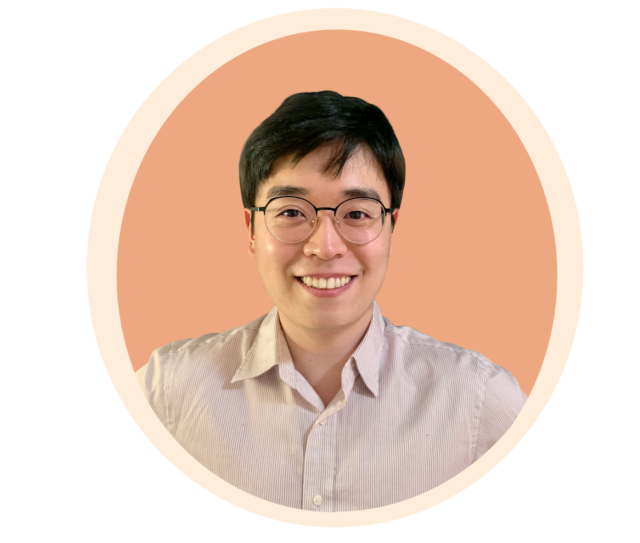
Joonho Lee, courtesy Telluride Science.
Joonho Lee is an assistant professor of Chemistry and Chemical Biology at Harvard University, where he leads a research group using computers to understand how molecules and materials behave. His work sits at the frontier where chemistry meets quantum computing, developing new methods and algorithms to tackle key challenges of today like energy and sustainability.
Lee earned his Ph.D. in chemistry at UC Berkeley, where his dissertation won the American Physical Society’s 2020 Justin Jankunas Doctoral Dissertation Award. Before joining Harvard in 2023, he worked as a postdoctoral researcher at Columbia University.
Lee also serves as a visiting faculty researcher at Google Quantum AI, where he develops quantum algorithms for chemistry.
Lucja Barker, more
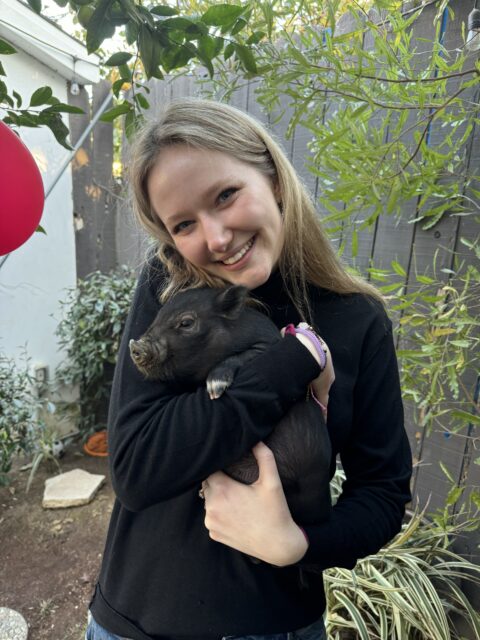
Lucja Barker grew up in Telluride and Los Angeles. She studies environmental science and political journalism at NYU. And is delighted and honored to be working as an intern at the Telluride Science Center this summer.
Sorry, the comment form is closed at this time.