

04 Aug Telluride Mushroom Fest: Keynote Speaker/Ethnobotanist Mark Plotkin!
Calling all mycophiles, myconauts, and mycocrazies: now is the time to “Rewild!” Each year Telluride, Colorado is the epicenter of the largest wild mushroom happening in North America. Plans are all set for the 46th annual Telluride Mushroom Festival (TMF), August 12 – August 16 , 2026.
Those plans include world-renowned ethnobotanist/ethnomycologist Mark Plotkin, one of the keynote speakers for the happening.
Plotkin’s schedule is as follows:
Thursday, Aug 13, 8:15pm — Keynote: ‘The History of Hallucinogens at Harvard’ (Conference Center).
Friday Aug 14, 1:00pm — Book-signing with Robert Rogers & Chris Hobbs (Between the Covers)
Saturday, Aug 15, 10:15am — “Rainforest Conservation and the Search for New Shamanic Medicines,” (Sheridan Opera House). Solo talk, Plotkin’s core conservation/ethnobotany material.
Saurday, Aug 15, 1:00pm — Panel: “Latest Research from the World of Functional and Medicinal Fungi,” (Sheridan Opera House).
Go here to get your TMF pass.
Go here for more on the history of the Telluride Mushroom Festival. (Scroll back to 2009.)
Go here to listen to an episode from Plotkin’s popular podcast, “Plants of the Gods,” now entering its ninth season. And another interview from a few seasons ago that was extremely popular.
Go here to donate to Plotkin’s Amazon Conservation Team. The nonprofit is now celebrating 30 years as a pioneer in bicultural conservation.
Please scroll down to learn more about returning guest Mark Plotkin and listen to his podcast.

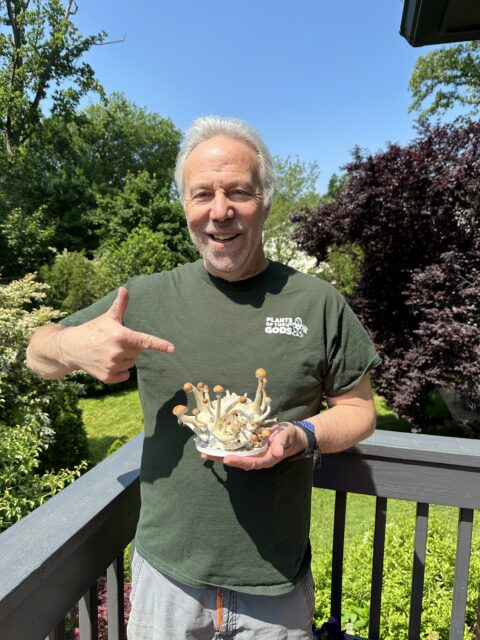
Plotkin with popular species of Stropharia, courtesy ACT.
Harvard is a bastion of higher learning, but one with a singular, perhaps surprising entanglement in the psychedelic story – although the chemistry did not originate there.
LSD was Albert Hofmann at Sandoz in Basel – psilocybin was isolated and synthesized by Hofmann from mushrooms that R. Gordon Wasson — a banker, not a Harvard scientist — brought to Western attention via Mexico. Mescaline traces to Germany in the 1890s. So the molecules that made the era possible are a European-and-Mexican story.
And, as Telluride Mushroom Festival keynote speaker Mark Plotkin believes, the deepest roots have little to do with academia. His worldview revolves around the fact the real “ground zero” for plant-based medicine lies in the Amazon jungle. It is Indigenous: Mazatec, Amazonian, and other traditions have used plants and fungi for centuries before any Western university or Westerners in general bothered to notice.
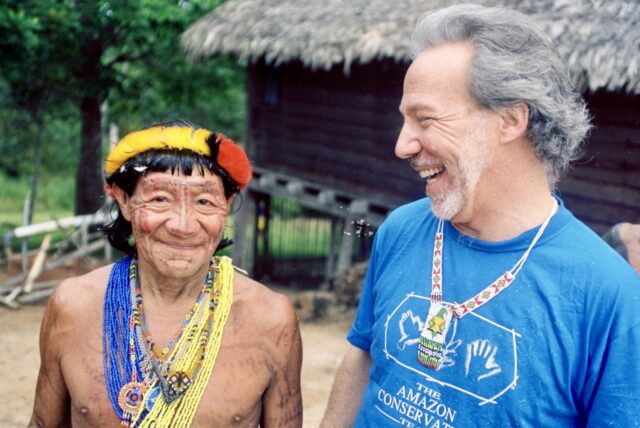
Plotkin w Akuriyo pal Poneh, formerly an uncontacted tribe, courtesy ACT.
Born 1955, Plotkin is president and co-founder of the Amazon Conservation Team; author of “Tales of a Shaman’s Apprentice” (and other books); and host of the podcast “Plants of the Gods,” which is about to begin season #9. Equally importantly for Mushroom Festival attendees, Plotkin was one of the last students of Richard Evans Schultes, the Harvard botanist widely called “The Father of Modern Ethnobotany.”
Another key to the under-told Harvard/plant-baed medicine story is the author William James. In the 1890s, James inhaled nitrous oxide and wrote about glimpsing an “intense metaphysical illumination,” folding it into his “The Varieties of Religious Experience.” James’ core idea? Ordinary consciousness is one type among many, separated from others by “the filmiest of screens.” The book became a touchstone for everyone who came later – including Schultes.
Starting in the 1930s–40s, Schultes did the fieldwork, documenting peyote, Psilocybe mushrooms, ayahuasca, and their ritual use among Indigenous peoples, and collaborating with chemists like the aforementioned Hofmann.
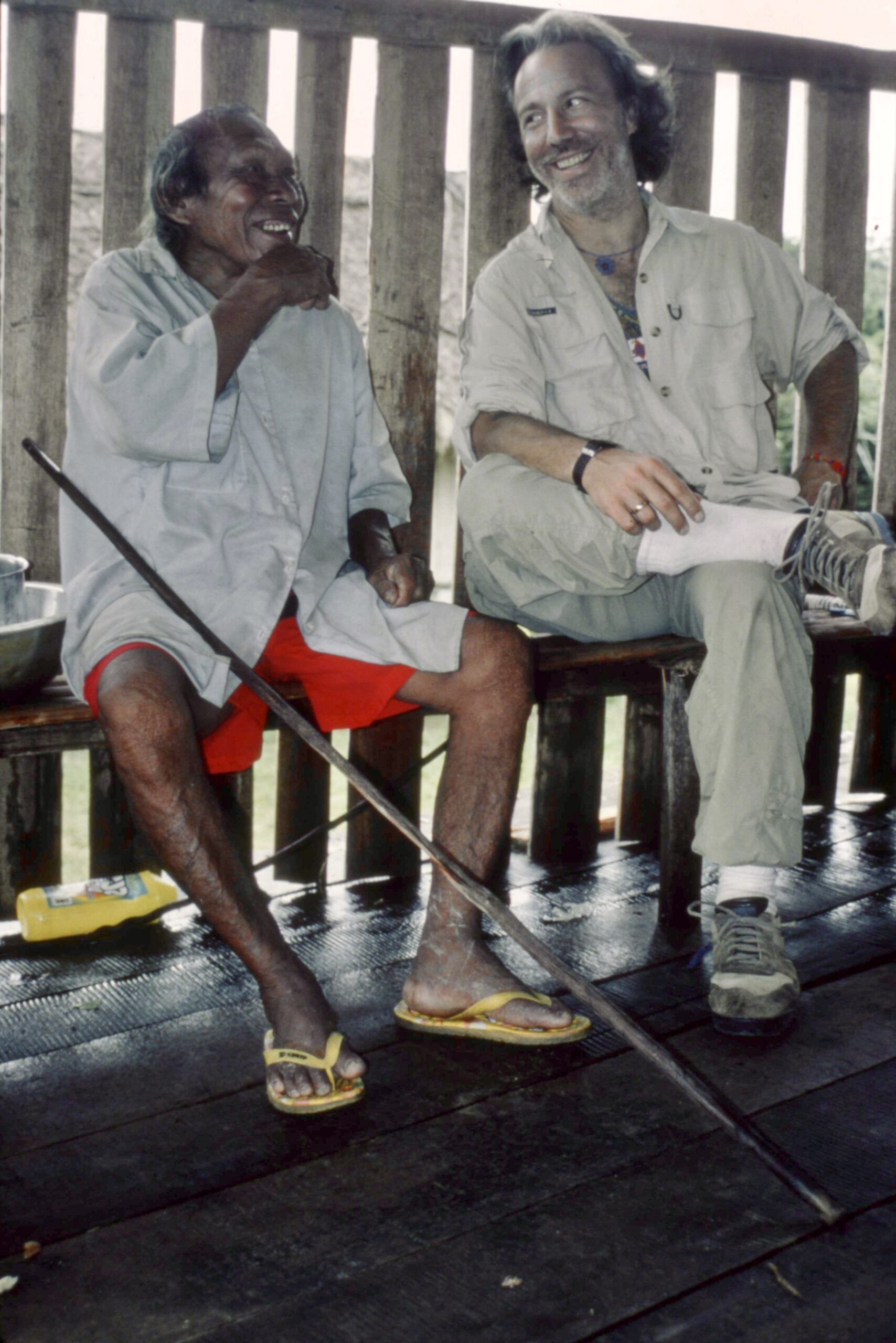
Plotkin w Jaguar Shaman, Trio tribe, Suriname, courtesy ACT.
Beyond that we land on the Harvard Psilocybin Project (1960–63), aka Timothy Leary and Richard Alpert’s experiment. That bummer chapter ended in scandal with both men’s dismissal. That scandal arguably set psychedelic science back a generation before the current renaissance.
Plotkin is often pointedly critical of the Leary chapter and of what he calls “rent-a-shamans” and fly-by-night commercialization in today’s psychedelic boom. Again and most importantly for his Telluride talks, Plotkin tends to position Indigenous knowledge and conservation — not Western therapeutic hype — as the center of gravity, just as the title of Plotkin’s keynote, “Rainforest Conservation and the Search for New Shamanic Medicines,” trumpets.
The title of that talk signals a return to Plotkin’s core ethnobotany-meets-conservation material, the idea that the Amazon is the world’s biggest medicine cabinet and that shamanic plant knowledge is disappearing faster than the forest itself.
For much more about Mark Plotkin’s life and work, check out our podcast.
Sorry, the comment form is closed at this time.