

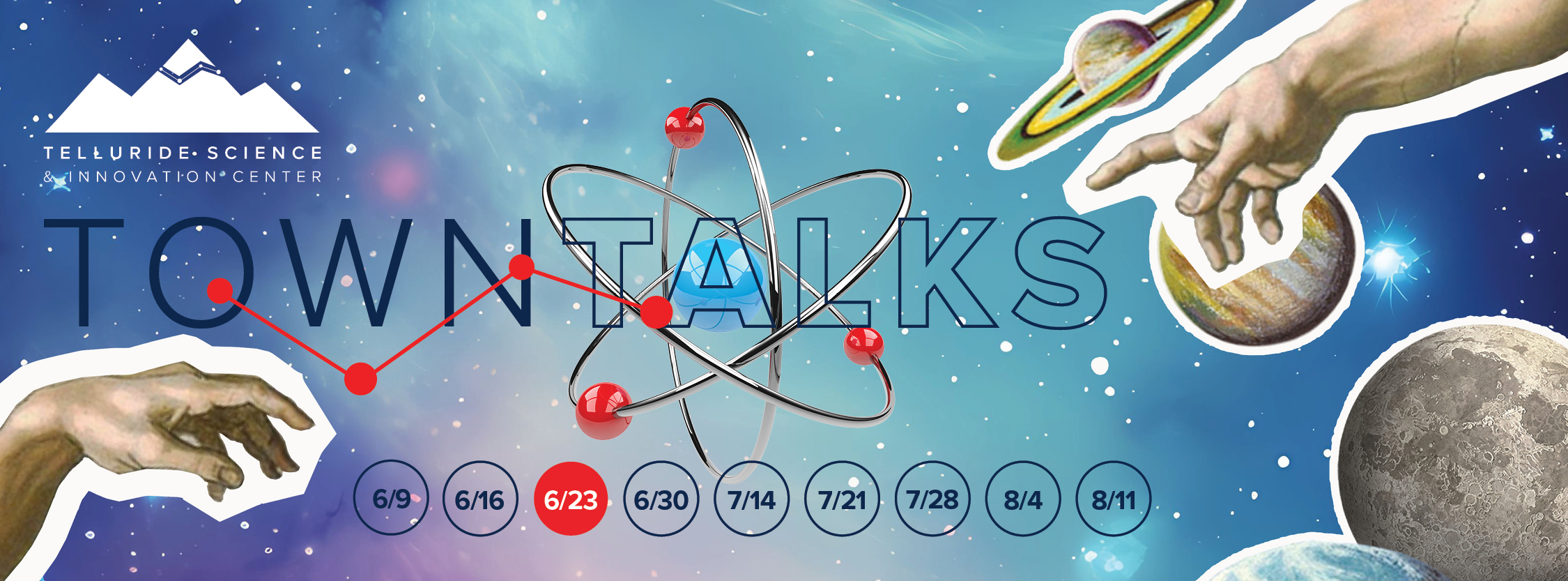
23 Jun Telluride Science Town Talk: “Small Molecules at the Origins of Life,” 6/23!
This coming week the 2026 Telluride Science Town Talks series continues with “Small Molecules the Origins of Life.” The event features Dr.David Lacy and takes place Tuesday, June 23. Doors 6 p.m.; talk, 6:30- 7:30 p.m.
Town Talks are FREE and open to the public.
Visit telluridescience.org to learn more about Telluride Science and the historic Telluride Depot, now the Telluride Science & Innovation Center. The venue is the permanent home for Telluride Science and a global hub of inspired knowledge exchange and development where great minds get to solve great challenges.
The 2026 Telluride Science Town Talks series is presented by Alpine Bank with additional support from the Telluride Mountain Village Owner’s Association.
Go here for more about Telluride Science.
Go here for more on Town Talks.
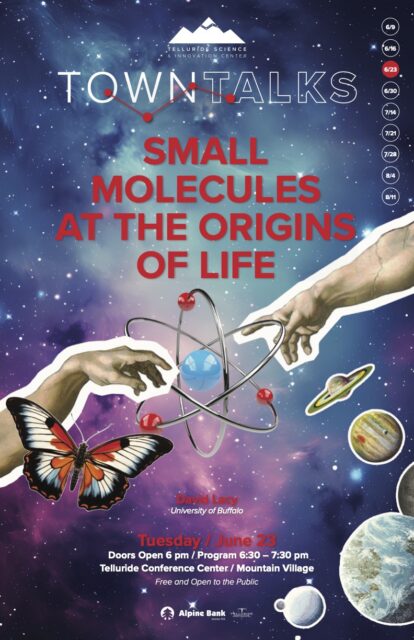
Long before there were cells, enzymes, or anything we’d recognize as alive, there were reactive minerals at the bottom of ancient oceans. Dr. David Lacy believes those minerals acted as the first catalysts, sparking the chemical reactions that turned simple molecules into the building blocks of life. So the exact same metals that make your hiking gear rust, according to Lacy, may be the reason we exist.
At Lacy’s Telluride Science Town Talk on June 23, he will discuss two of the most profound questions of science: How did life begin? And are we alone?
Lacy will also talk about Mars as a cautionary tale.
Scientists now believe Mars may once have harbored life, and that life may have driven itself to extinction by changing its atmosphere. It is a sobering thought, especially as we watch our own atmosphere shift in real time.
Central to his research is the concept of metallocofactors: tiny metal-containing molecules that sit inside enzymes and do chemical heavy lifting. Metallocofactors are in fact nature’s original power tools. And they show up everywhere. In bacteria. In plants. In animals.
That kind of universality means one thing: metallocofactors were there at the very beginning of life as we know it.
Before there were enzymes, before cells, early Earth had oceans full of dissolved metals, sitting on rocky mineral surfaces at the bottom of the sea.
Lacy explains that those minerals were already doing a crude version of the same chemistry that enzymes do today.
No biology required. Just metal-rich rocks, simple molecules, and the right conditions.
The enzyme, from that standpoint, is just a very sophisticated rock.
So if it all started with a sophisticated rock, could there be life elsewhere?
Dr. David Lacy, more:
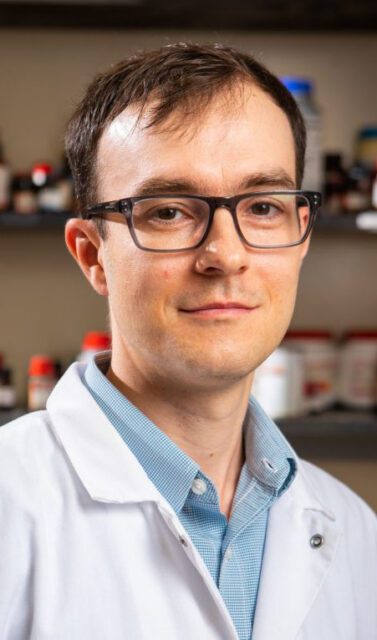
Dr. David Lacy, courtesy Telluride Science.
Dr. David Lacy is an Associate Professor of Chemistry at the University of Buffalo’s College of Arts and Sciences, where he leads the Lacy Lab. His research sits at the intersection of inorganic chemistry, organometallic chemistry, and astrobiology, with a focus on the role of transition metals, particularly manganese and iron, in catalysis and the origins of life.
Lacy earned his B.S. from Colorado State University in 2007 and his Ph.D. from the University of California, Irvine in 2012, followed by an NIH Postdoctoral Fellowship at Caltech. His work has been recognized with an NSF CAREER Award, the Arthur E. Martell Early Career Researcher Prize, and UB’s Exceptional Scholar Young Investigator Award.
A Telluride Science workshop attendee himself, Lacy has described the experience as “riveting,” a place where cutting-edge science meets lasting collaboration. And, he notes, great hiking.
Lucja Barker, more
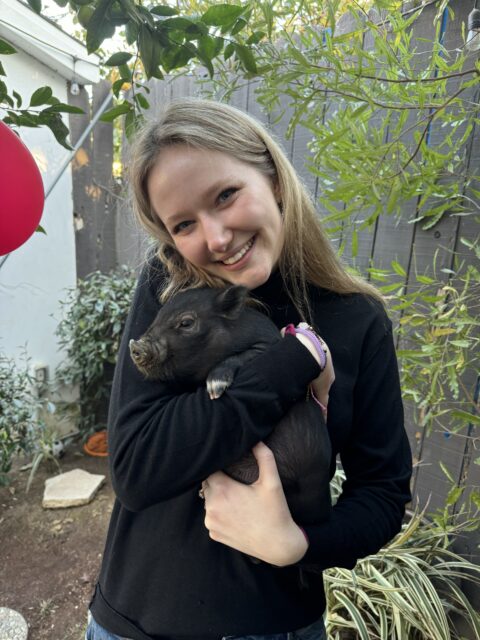
Lucja Barker grew up in Telluride and Los Angeles. She studies environmental science and political journalism at NYU. And is delighted and honored to be working as an intern at the Telluride Science Center this summe
Sorry, the comment form is closed at this time.