

19 May Mountainfilm 2026: “Papertown” Premieres! Do Not Miss It!
Audiences attending Mountainfilm’s 48th annual festival will be the first in the world to watch a standout selection of documentaries making their world premiere over Memorial Day Weekend, May 21–25. One of those films is “Papertown,” a project directed by Jeremy Seifert. And a must-see.
Go here to donate to help Mountainfilm create a better world.
For more information about Mountainfilm 2026 and upcoming program announcements, visit mountainfilm.org.
Go here for more about Mountainfilm (going back to 2009).
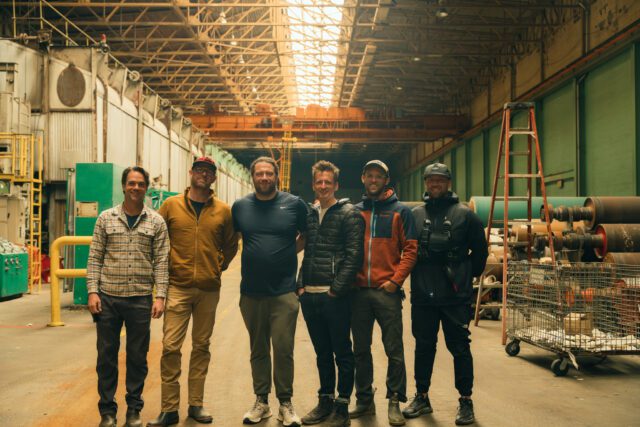
Crew Photo in Mill: Jeremy Colby Jacob Chris Ben Luke.
Former mill worker Matthew Boydston is a Falstaffian character with a quick wit and a penchant for memorable metaphors delivered in a thick Appalachian accent.
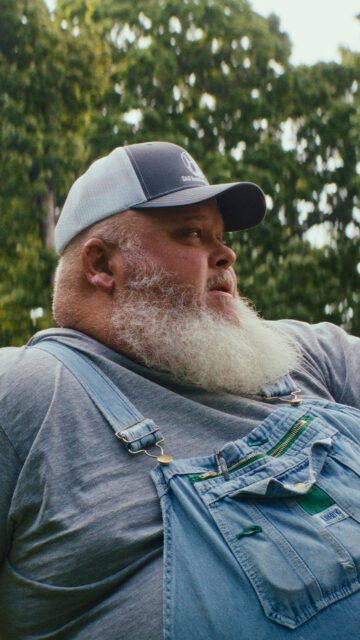
Mill employee Matt Boydston relaxing on his lawn.
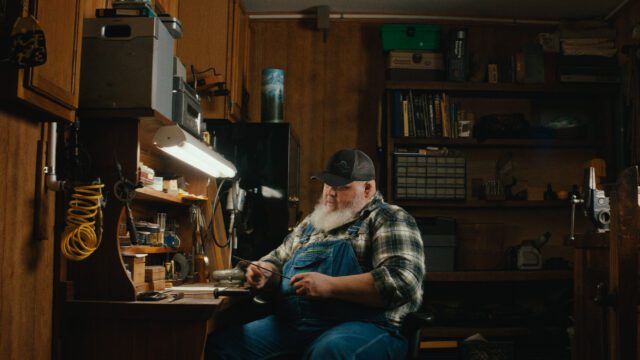
Mill employee Matt Boydston sharpening a knife in his home workshop.
She is super smart, easy in her (liberal) skin, and passionate about her community. Gail Mull is the outspoken union secretary for the United Steelworkers Smoky Mountain Local 507, and the town’s Mayor Pro Tem. She is also one of only board members who worked in the mill. In our book, the lady would be a viable candidate at the State or National level for any public office.
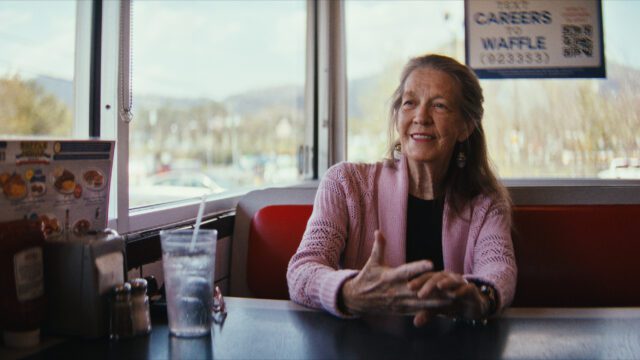
Gail Mull sitting at the Canton Waffle House,
The Mayor of Canton, NC is Zeb Smathers. His family has deep roots in Canton: Zeb’s grandparents owned the downtown grocery store and his father was mayor for 12 years. Like Matthew and Gail, smart as a whip and utterly engaging.
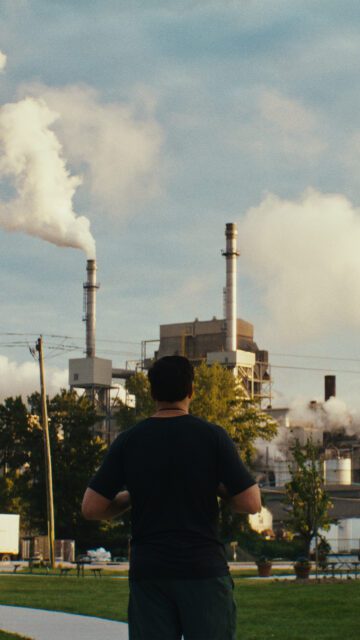
Mayor Zeb Smathers looking at the paper mill in the distance.
As the trio above proves beyond a shadow of a doubt “Papertown” challenges stereotypes about “Hillbillies” by simply showing their full humanity. According to Jeremy Seifert, his film is “a human story of resiliency, the meaning and dignity of workers and good paying jobs, and the power of community and neighborliness.”
Then there is the guy in the black hat, Eric Spirtas, president of Spirtas Worldwide, a company specializing in demolition, environmental remediation, and property redevelopment. Impeccably tricked out in a designer suit and bespoke accessories, the man is central casting for, well, The Man. Only thing missing from his diatribe was a hiss…
“Papertown” begins about three years ago when a small crew of local filmmakers began documenting a seismic moment in the life of Canton, NC — when the company that owned the beloved paper mill that shaped the town for nearly 120 years suddenly announced the facility was closing.
The film moves with the community in real time, capturing the confusion and heartbreak as rumors spread, questions go unanswered, and The Man — Pactiv Evergreen — stands back, remains silent. But worse, details emerge about executives profiting from stock trades just days before the announcement, anger and betrayal deepen.
The closure left 1,200 people without jobs, undoing the economic fabric that held the community together for over a century.
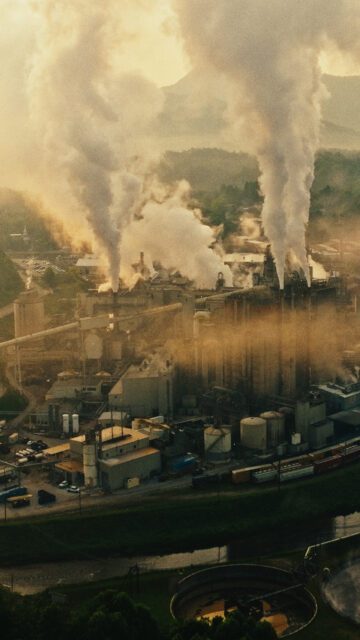
Canton Paper mill in full operation before closing.
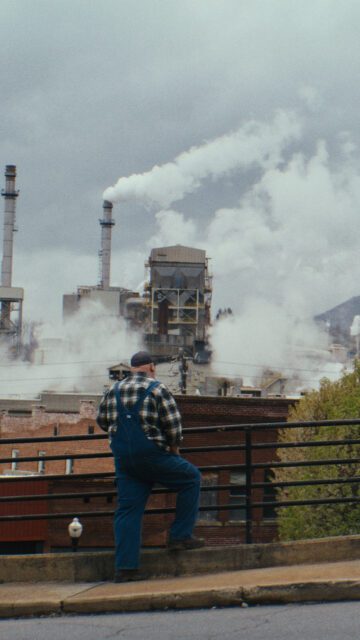
Matt Boydston looking out over the paper mill.

Town resident crying on the phone during the last whistle of the paper mill
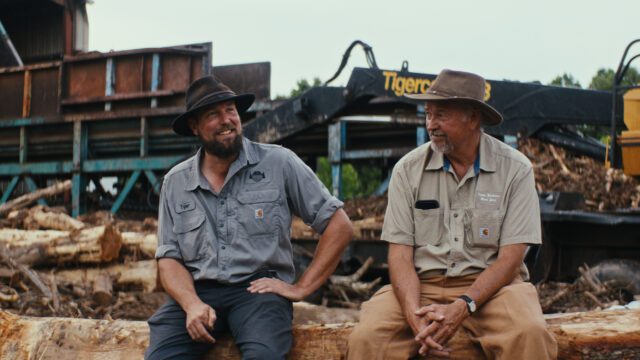
Capps Brothers sitting in front of their wood pulp business.
Jeremy & Co. set out to document the experience of the workers and the community just days after they found out about the shut down. Third and fourth generation mill workers would be losing their jobs in just three months, and with it, a big piece of their identity and communal bond.
“This was happening just down the road from me but it felt so foreign and removed from my
world. It also felt important, not just for Canton but for all of us,” explains Jeremy. “I think that’s why the story turned up on the front page of The New York Times last summer: ‘A Mill Town Lost Its Mill. What Is It Now?’ From Times writer Emma Goldberg: 60,000 manufacturing hubs have been wiped off America’s map since the late 1990’s. For every 100 factory jobs lost in a community, 744 other jobs disappear.”
Jeremy and his team threw themselves into this story, showing up day after day (unpaid), fueled by a shared belief that this chapter in Appalachian history mattered.
“It was our community of local filmmakers meeting with and documenting the community of Canton and their struggle to comprehend what was happening, and they approached it with a particular kind of humor and resilience found only in this corner of the world,” Jeremy adds.
To learn more check out TIO’s podcast with Jeremy Seifert.
Sorry, the comment form is closed at this time.